Dad. Who Was He? Who Am I?
A paper for the club by Will Parish
April 12, 2021
It’s Labor Day, and I’m 16. I arrive home for dinner, late.
“Bill, why are you late?” Mom asks.
“I’d like to talk about it with Dad after dinner,” I reply.
She asks again, but Dad intervenes: “Sue, Bill and I will talk about it after dinner. Please pass the butter.”
All through dinner, my stomach clenches. I can only take short breaths, and I can’t pay attention to any of the conversation.
After dinner, I follow Dad into his den. He closes the door.
“I’m in trouble, Dad.”
“With the authorities?”
“Yes.”
“Were you speeding?”
“Yes.”
“How fast?”
“ 70.”
“70!?”
“In a 35.”
“In a 35?!”
“On a motorcycle. And I wasn’t wearing a helmet.”
“What??” Dad pushes his athletic build straight out of his chair, glowers across the desk at me, and slams his fist down. I jerk upright.
“God dammit Bill, what does it take you to learn?”
I figure this is a rhetorical question, and that I should get out the rest of the facts. “I was late to dinner since it took so long to write up the five offenses.’”
“Five?!”
“Yes. I also ran a stop sign, the motorcycle didn’t have any mufflers, and I didn’t have the registration.”
My dad stands motionless, staring at me in disbelief and bitter disappointment. I just want him to sit down. Tell me how bad I’ve been. Punish me. I’ve never done anything this bad, so I’m expecting the worst. But it was worth it! That speed, the wind in my hair, I could still feel the grip of my girlfriend’s arms around me.
Finally, Dad drops back into his chair and speaks.
“Son, you used poor judgment. It’s Labor Day, and you know the police are extra active. A motorcycle is dangerous, let alone at 70 miles per hour on a windy road, and you being an inexperienced rider. You have got to learn the value of assessing and mitigating risk.” This reaction is in line with what happened after a dangerous incident when I was 14 where I got a short lecture.
He leads a conversation on all aspects of risk taking, thinking ahead, developing good judgment, and being conscious that actions have consequences. He tells me that I will have to go to court to face up to my violations, and how the state will revoke my license. He says I’ll have to apologize to my mother for lying to her. This is not a short lecture! Two hours later I leave his den, feeling exhausted and sufficiently chastened.
Approaching the court date, Dad coaches me to get a haircut, what to wear, and how to show respect and remorse. My best friend’s parents always grounded him as punishment, and I appreciated that Dad used my own desire to do the right thing as internally generated discipline.
I think his military experience influenced his parenting. I recall him talking about Chesty Puller, who was Commander, M Company, Third Battalion, Seventh Marines, where Dad was a Platoon Captain. Chesty was revered by everyone under his command, and respected by his superiors. Dad admired Puller for being a strict disciplinarian, and his way of taking a soldier’s mistake, analyzing it, seeing what went wrong, and having the soldier come up with a plan to get a better outcome next time. I think Dad wanted to inspire me in a similar way, to help me realize that I should not feel bad about making a mistake––unless I didn’t learn from it. He was fond of saying things like, “I’ll bet you won’t do THAT again.” Often about silly little things like driving the boat too fast into the slip and banging the bow against the dock or riding my bike too fast on gravel and taking a tumble. He wanted me to learn from my actions rather than from him punishing me or hurling a slew of cautionary warnings at me. Making an excuse for why a mistake happened never worked. Dad had no respect for excuses––one of his favorite sayings was, “If a frog had wings, he wouldn’t bump his ass.”
So, going back to the dangerous thing I did when I was 14. I loaded up our tractor with four friends, put it neutral, and flew down a hill in the field behind our house. Five boys clinging on to the back of a farm tractor, careening down a hill, between trees, laughing uproariously. Unbeknownst to me, my dad was watching me do this stunt. In the short talking-to that resulted, he said, “Bill, I’ve lost confidence in you. You are not respecting the lenient rules and not making good decisions. You will be able to earn back my confidence, but it will take time.” That was it. No outward punishment by Dad.
Now here I was, two years later, having blown it again. I painfully struggled with the idea that he no longer had confidence in me. I needed Dad to trust me for me to trust myself.
As a shield against ever losing his trust again, I constructed a filter in my brain between impulse and action, through which flowed all my ideas of things I might do. And from then on, this “Dad Approval Filter” guided me.
The filter grew to dominate my decisions to the point where I often couldn’t distinguish whether something interested me intrinsically or because I thought Dad would approve. I chose Williams College partly because it was my dad’s alma mater. I wanted to major in psychology and minor in Drama, but had to contend with the fact that Dad didn’t respect those fields. He was fond of saying, “The only people who need shrinks are shrinks.” As for Drama, he didn’t encourage my mom’s love of acting. Her mom acted in some off-broadway plays, but Dad never spoke in admiring terms of those ventures. He never took us to art shows or cultural events. But ever since 7th grade, he had seen how much I loved acting––I was always getting major roles––but he showed no interest in this passion of mine. After a play, he didn’t ask me questions about what it felt like, or how I memorized my lines. He didn’t comment on anything that stood out for him.
One crisp fall evening my freshman year at Williams, I called Dad from my dorm’s pay phone with exciting news.
“Hi Dad. Guess what?”
“What?”
“The director of the Freshman Review just told me that he would give me any part I wanted. Isn’t that great?”
I waited for the approval I craved. Dad was silent. My throat tightened.
“What about your academics and your athletics?”
“Oh, I can do those too.”
“Not if your commitment is to something else. Life is about priorities. I suggest you think it over.”
I told him, yeah, he was right, I can’t do everything. Poof. There went all my dreams about majoring in something fun. I hung up the phone.
Dad was all about priorities and making choices, and I knew if my college experience was to be meaningful in his eyes, I had to choose something where I had to work hard. He equated meaningfulness with the amount of effort it took to succeed. Being a Drama major was not enough of a challenge.
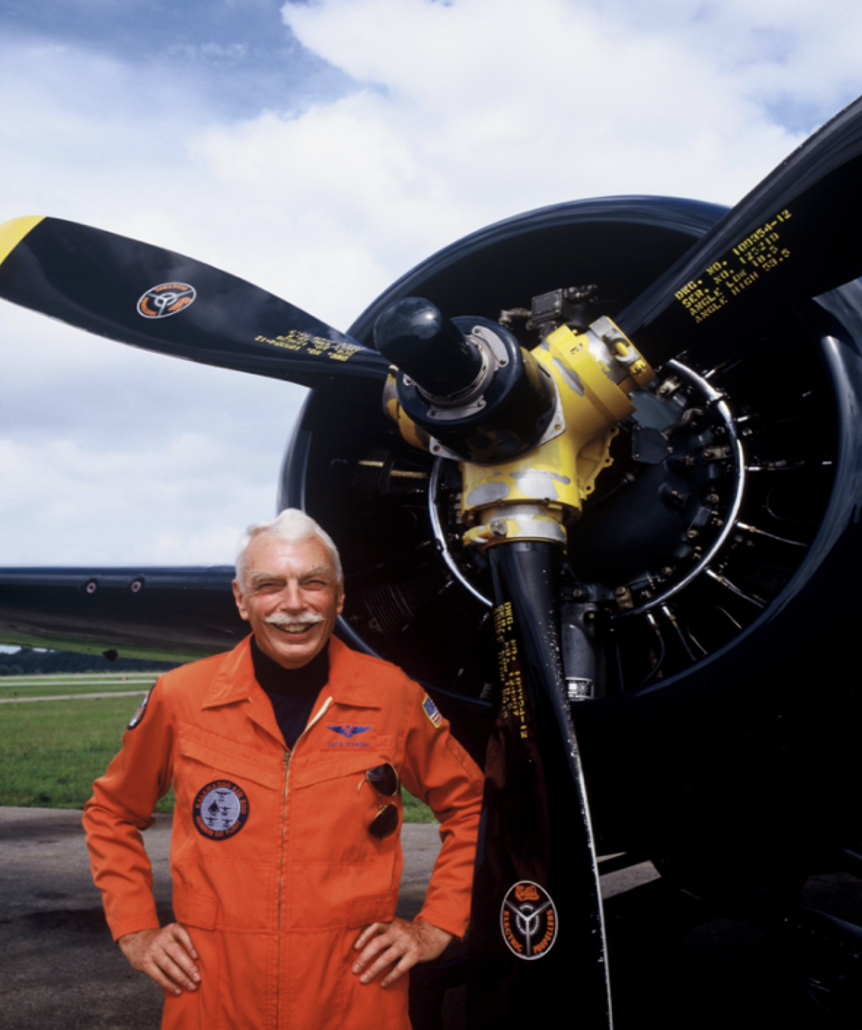
At least Dad was consistent. He was always challenging himself. He practiced golf incessantly to improve his handicap and got it down to a seven. In aviation, he kept getting advanced flying certifications up to aviation’s PhD: the Airline Transport Rating, that he would never use! He was always reading the latest business books like In Search of Excellence, or Peter Drucker’s The Effective Executive.
After that phone conversation, I didn’t try out for another play ever. As for my major, I chose Political Economics. It was really hard, but an upside was that I could talk to Dad about the topics I studied. Of course, he always knew more than I did. He never acknowledged how hard I worked.
I knew Dad admired the effort I put into this major, though he never told me so. Dad expected me to work hard, and he didn’t offer praise for a job well done, or for the effort I put into something. The Dad Approval Filter did not come with actual approval being shown by Dad.
I saw the absence of giving praise as a flaw in Dad’s parenting style, and I developed a new filter, the “Don’t be Like Dad Filter.” A primary example of Dad holding back praise is from the summer when I was 17. I worked at the Kalamazoo airport as a line boy. Being around airplanes was fun, signaling where pilots should park, driving the fuel truck, gassing up airplanes, and cleaning windshields. At the end of that summer, I was packing to leave for prep school when I overheard Mom and Dad talking downstairs.
“I think we should show this letter to Bill,” Mom insisted.
“No! It will only give him a big head.”
Later, however, my mom did show me the letter. It was from a pilot whose plane I had serviced that summer, who said that my extra attention to detail, like cleaning the inside of his windshield, changed his attitude about all long-haired teenagers lacking fastidiousness and how much he appreciated the service that went above and beyond.
It confused me that Dad did not want me to know about the praise in that letter. All through college if I got a B+, his response would be, “Maybe you can move that up to an A next semester.” Dad just expected top notch performance.
Even now, it puzzles me how good he was at using mistakes to teach lessons, but that he didn’t use successes to do the same. It was partly a cultural thing, just how dads were supposed to parent back then; disciplinarians, pointing out shortcomings. Positive reinforcement would’ve fallen more in the nurturing mode of mothering. In the Marine Corps, he had learned that he had to be tough; Dad always said, “When the going gets tough, the tough get going.” I never heard him say anything about being rewarded for good behavior.
Something else that got stuck in this Don’t Be Like Dad Filter was his lack of curiosity around us kids. Dad seldom showed curiosity about what we were learning.
For example, one evening when I was in 7th grade, I approached Dad while he was reading the paper in his chair in the living room, as he always did after dinner.
“Hey Dad, I’m…”
“Hay is for horses.”
“OK, Straw Dad, I’m learning about new math.”
“Very funny. Math is math.”
“No, this is different. Do you know what a complementation is?”
“You mean compliment.”
“No! It has mathematical meaning. It’s the process of taking the complement of a set or truth function. It’s the same as the NOT operation.”
He kept reading the paper
I pressed on.
“Dad, What’s the number 9 in the base 3 system? Do you know? It’s equal to 100!”
“What on earth are you talking about? Is this what you’re learning in school?”
“Yeah, I love thinking about how numbers can have different meanings in different settings.”
“A number’s a number. Always will be. Now, stop this nonsense. I’m trying to read the paper.”
Shunned, I left. Sad, angry, and confused. Dad did not like being shown up.
Another time at the dinner table, a question arose to which Dad did not know the answer. He made all of us follow him into the living room. He grabbed the correct World Book Encyclopedia off the shelf, found the concept, read the information out loud, smiled at us, then closed the book and put it back. End of discussion. He focused on the act of finding the answer, but not the content, or any extensions of it.
Perhaps Dad thought having curiosity was admitting you didn’t know something, which to him was a sign of weakness. Instead, he showed how clever he was with certain pat phrases, like, “You’ll find the answer up in Maggie’s room behind the clock.” Or, “That’s to make little boys ask questions.” Or, “Stop trying to be difficult.” He’d use that one if I was asking follow-up questions to which he didn’t have answers––instead of supporting my analytical bent.
Dad’s assuredness fueled our belief that he was always right.
There were times, however, when Dad knew he had gone overboard in asserting his point of view. On these rare occasions, he also showed remorse. He would sit on my bed when saying goodnight to me, and the exchange would go like this:
“I hope I wasn’t too harsh with you tonight.”
“No, that’s OK, Dad.”
“OK, good night.”
He’d kiss me on the forehead and leave. I would lie in the darkness, thinking what a wonderful dad he was, to know when he had pushed too hard and to reconcile with me.
I think his assuredness grew out of the hardships he dealt with in the War. Not knowing something could be seen as a weakness. He had to be right about where he led his men––and convey confidence. And even then, 72% of his men were killed in the Peleliu campaign. I’m sure Dad felt responsible. He connected deeply with those around him.
As I entered my 40s, raising two boys, I could better appreciate the complexities of being a father, including this urge to always be right. Doing the best I could as a father, and seeing my own shortcomings, made me feel compassion for Dad. He was how he was because he had to be. Disciplinarian, not praising, not conveying emotion. His attitude didn’t harden him against caring about people, though.
I first came to admire Dad for his ability to connect with the people as a teenager when I visited his office at the Upjohn Company headquarters in Kalamazoo, Michigan. When he took me to the cafeteria for lunch, I marveled at his interactions with all the employees, no matter their level in the company hierarchy.
“Hi Betty, those peas look great today. How’s your son feeling?” Or, “Hey Joe! I think those ribs are too good to resist. How about a couple? Say, has your car come back from the shop yet?”
His ease with people was noticed, and propelled his early success at Upjohn. He was promoted to head of personnel at about the same time unions began approaching Upjohn. Dad recognized the right of employees to make a living wage and to have good, clean, safe working conditions. The unions were not successful in trying to organize the Upjohn employees, who felt they already had good managers who treated them with respect, compassion, and fairness. Dad expanded on the policy of the company founder, W.E. Upjohn, of treating employees like members of a family.
As I grew older, the “Dad Approval Filter” and the “Don’t Be Like Dad Filter” fell by the wayside, replaced by the “What Would Dad Do Filter.” There were so many qualities I admired about him, in addition to his compassion for people. He would always be level-headed and reasonable. He would never exaggerate. He would use precise language. He would bristle at people making generalizations and using hyperbole. He would think before he spoke. He would not jump to conclusions, and would want to hear the other side of every story. He would seek to understand the points of view of those around him. He would not seek praise; rather, he would deflect it on to colleagues he thought deserved it more.
I’ve often asked “What would Dad do?” in certain parenting challenges, for example when the kids came up with big ideas of things they wanted to do. I’ve tried to be supportive as Dad was with ideas involving development of self reliance, stick-to-it-tiveness, and creative problem solving.
While I was a line boy at the Kalamazoo airport, I took flight lessons and passed my exam and certification ride just before my 18th birthday, during my senior year at prep school.
Spring of that year, I came to Dad with a big idea: “I know what I want to do for my Senior Project. Borrow an airplane from Kal Aero and fly it down to Mexico and back. It’s only 6,000 miles and I could do it in 26 days. I can make a movie about it, and show it around Kalamazoo to inspire people to get their pilot’s licenses at Kal Aero.” Dad embraced the idea from the beginning and helped me think through the logistics using his experience with flying airplanes. Every step of the way, he encouraged me not to let any obstacle stop me, such as skeptical school administrators who refused to accept the idea at first. However, he didn’t solve any challenges for me, instead exhibiting confidence in my ability to do it myself.
After the successful trip. I presented my movie to the various Kiwanis and Rotary clubs in Kalamazoo. My dad attended one, and I overheard him say to one of the fathers how proud he was of me.
In addition to encouragement of ideas, Dad stood by me in times of personal crisis.
Dad watched me crash on all 3 warm up jumps at my second year of qualifying for the NCAA Skiing Championship my Junior year. My coach, seeing the potential for serious injury, withdrew me from the competition. In utter embarrassment, I walked away from the ski jump and hid in the lodge bathroom. Dad had followed me, and said, “Keep your chin up, son. Accidents happen. You’ll get over it.” He told me I needed to be brave, not become discouraged, maybe have shoulder surgery, recover, and continue to excel. I felt dejected and sorry for myself, but my dad didn’t play into that at all. His encouragement to stop feeling sorry for myself, to get up, dust myself off, and get going, was not warm and cuddly, but it was what I needed.
Years later, he was there for me when the $100 million renewable energy company I had founded floundered after 8 years and had to be shut down and sold at a loss. He gave me valuable advice on how to treat the employees, the vendors, and the investors, and create the conditions for a soft landing. He reminded me time and again that the company had made a lasting impact on proving out renewable energy, that would be an example of what’s possible in the future.
Dad taught me a lot about being brave in the face of challenges, though I never had to test this bravery in the same kinds of life and death situations as he had during World War II. He and his best friend, Pete Richards, graduated Williams together, enlisted together, and went through Quantico together. On graduation, they were going to be assigned to different companies, when they did something everyone recommends against: They volunteered for the Heavy Artillery Company, and were accepted. They immediately shipped out on a secret mission which they soon learned was to the Pacific Islands. Their combat began in Guadal Canal. Later, Dad and Pete were transferred to Peleliu Island where Dad led one of the decisive battles in the South Pacific. The Navy awarded him the Bronze Star. The citation reads:
For heroic and meritorious achievement in action against enemy forces while serving as company commander in a Marine infantry battalion on Peleliu Island, Palau Group, on 17 September, 1944. In order to attack an enemy held peninsula, it was necessary for Captain Parish to move his company across a long and extremely narrow causeway which the strong enemy forces controlled by fire from numerous pillboxes and caves located on high ground and hidden by the dense jungle growth and coral formation of the peninsula. Despite intense enemy machine gun and rifle fire, Captain Parish moved his troops across the causeway and established a position on the peninsula. During enemy fire, he continually exposed himself, with disregard for his personal safety, to locate enemy positions so that he could better direct the fire of his men and supporting tanks. The success of the attack was largely responsible for the seizure of the entire peninsula by his battalion. Captain Parish’s unusual skill in combat, his leadership, personal courage and initiative were in keeping with the highest traditions of the United States Naval Services.
Like thousands of other brave men, Dad fought the enemy, often in hand-to-hand combat in malaria-ridden swamps. He ate grubs, worms, and insects to supplement his meager rations. Many nights, he led his troops on the evening patrol on that peninsula, avoiding exploding shells fired from Japanese ships at sea. On one such patrol, an exploding shell killed his best friend Pete. When the Pacific Island campaign was over, Dad’s company departed with fewer than 70 of the 247 Marines who landed there under his command. He was the only Company Commander in the Seventh Marines who was not killed or wounded.
Dad refused to talk with us kids about his war experiences, saying he only talked with other veterans. I didn’t learn about his Bronze Star until I was in my mid-40s, long after Dad had retired from the Upjohn company and was into his second career. He and my mother had developed the Kalamazoo Aviation History Museum. It became a Smithsonian Affiliate and is one of the country’s top aviation history museums. One day when he was showing me the South Pacific diorama, which included his Marine uniform, I asked him what the star was for. He told me in one sentence, and shrugged it off, saying that many men deserved it far more than he did. I read the plaque with his citation and for the first time realized how heroic a man my father was.
***
When I was in college, Dad began urging me to find a career path where I would become a “reference point.”
In a Marine Corps Rifle Platoon, a “reference point” is used for target acquisition and range determination. Dad used the term more loosely to describe someone who is so expert that he or she is the standard to compare against. Encouraging me to have a goal of becoming a reference point was in keeping with his philosophy that for an outcome to be worthy, it could not be something easily achieved. Dad himself felt he had not become a reference point on anything. He always felt like he was second best, for example, when my Uncle Ted, the Chairman of Upjohn, chose my Uncle Bob to be the next president, rather than my dad.
Dad’s message to me was to never stop striving. If you succeed at something, set your sights even higher next time. The problem with this perspective is that you’re never finished. If you’re always striving to be better, there’s never satisfaction with what you’ve done. Dad always felt he could do more. Whenever he got a compliment, he’d say the equivalent of, “that’s nice of you, but there are people who deserve credit far more than I do.” He didn’t celebrate his accomplishments. No wonder he could not celebrate his children’s.
One day I asked him if he was going to write a book about his life. He said, “No. Nobody will want to read a book by an “also ran.” I had to look it up. An “also ran” is a horse in a race that didn’t even place. I think he always had an undercurrent of doubt about himself––about why he was sent away to school at age nine, about if he was the cause of his parent’s divorce or his father’s death, about his divorce from my mom, about not being president of Upjohn.
But on top of all those traumas, I believe the greatest ones were in the war. Pete Richards had jumped into a foxhole right where a Japanese shell landed one second later. Dad was supposed to have led that patrol. He must’ve lived with that guilt for his entire life, along with losing so many men under his command. That amount of loss of friends and fellow soldiers gave dad a sense of responsibility to make the most of his one life. What is “the most?” It’s something he never achieved to his satisfaction.
Dad may not have seen himself as a reference point, but he definitely was one to me––in the ways he showed leadership, compassion, bravery, empathy, and always improving himself.
Writing this paper has helped me synthesize and integrate who dad was, and the ways in which he influenced me. But it has also left me with many questions.
Did he put a lot of pressure on me, or was I just an open receptacle looking to be filled with purpose? Perhaps my birth order, the first son after two daughters, so soon after the War ended, created in him some high hopes.
I wonder where my dad found his motivation. Did it come from him, or was he seeking somebody else’s approval? Like from the short time he had with his father? Did he learn it on his own, or from other mentors throughout his life? His motivation seemed innate, and I always wanted to be able to experience that confidence.
What kind of relationship did my dad have with his dad? I don't know what the effect of his dad’s death was on him. Maybe the Marine Corps became his father. I wish he had told us more stories about his past. It would’ve helped me see him sooner as a full person, one with faults.
***
My dad took me skiing at Vail when he was 88. I followed him down a black diamond run. He skied slowly, steadily, planning each turn, and mitigating the risk of falling. At the end of the weekend, he said, “Well that’s that.”
I asked, “What’s that?”
“That’s the end of my skiing.” He was so matter of fact. Not mournful. He was joyful to have skied for so many years. He just knew when he was finished. How did he do that? Did he do his last run with me for a reason?
As Dad aged, I lived in fear of losing him as my reference point, and wondered how I would get along without his support. But when his mind deteriorated around age 95, to the point where conversation was no longer possible, I finally could let go of seeking his approval.
He died last July at age 100.
Now, in my late 60s, I look back on my filters and see how they helped me internalize as my own the character traits of Dad’s that I admired. There are many situations, still, where I ask myself, What would dad do? I guess he’ll always be my reference point.